The conversation about AI in grocery retail tends to run ahead of the evidence. Depending on what you read, AI shopping agents are either about to reshape the entire FMCG category or they're a solution in search of a problem. The reality is more nuanced than that.
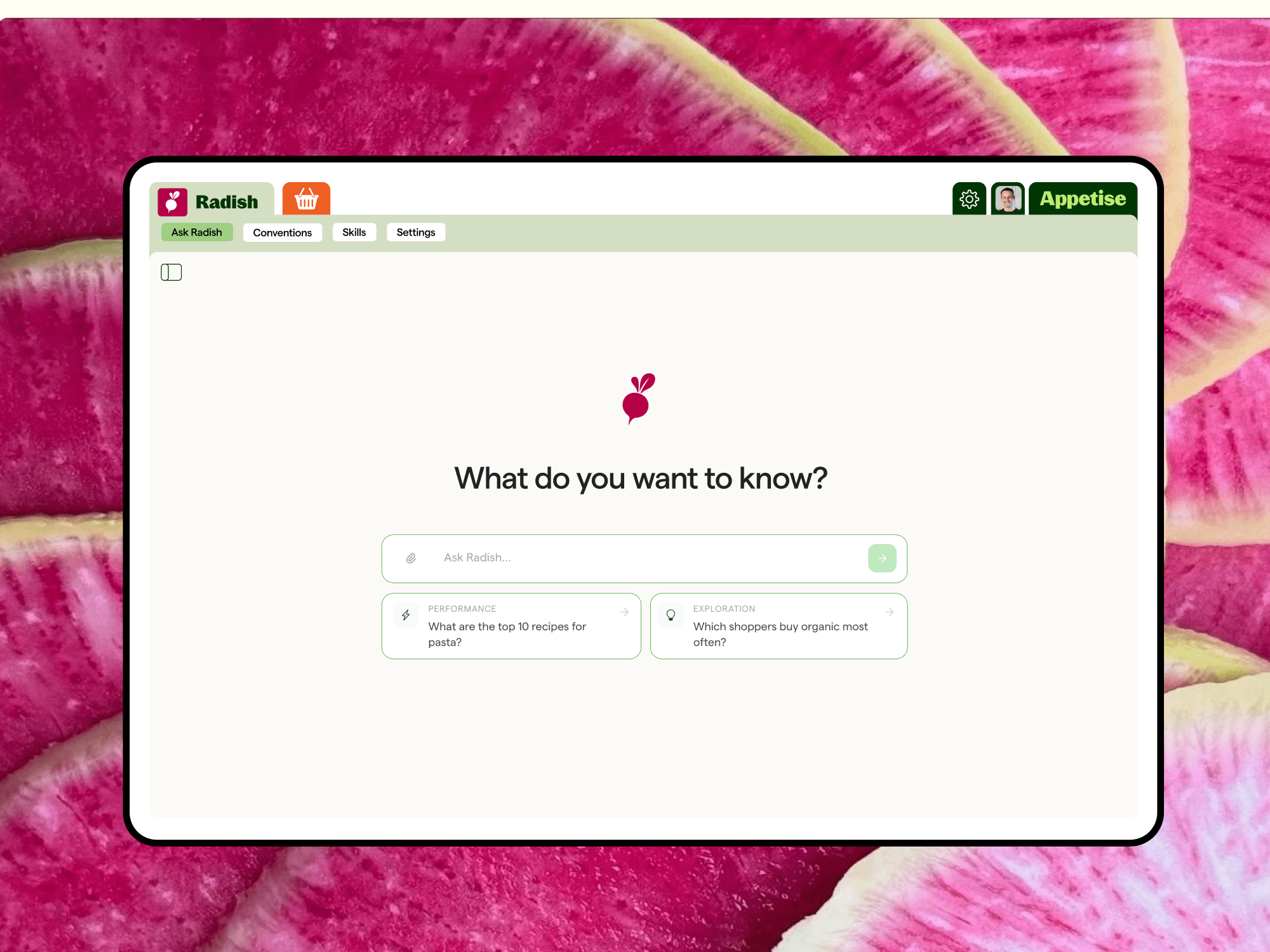
We've been watching how shoppers actually use AI-assisted shopping features inside the Appetise platform. A clear picture emerges, showing us where we’re currently at with agentic commerce.
Shoppers are comfortable letting AI help them decide what to cook. They're considerably more guarded about letting it decide what to buy.
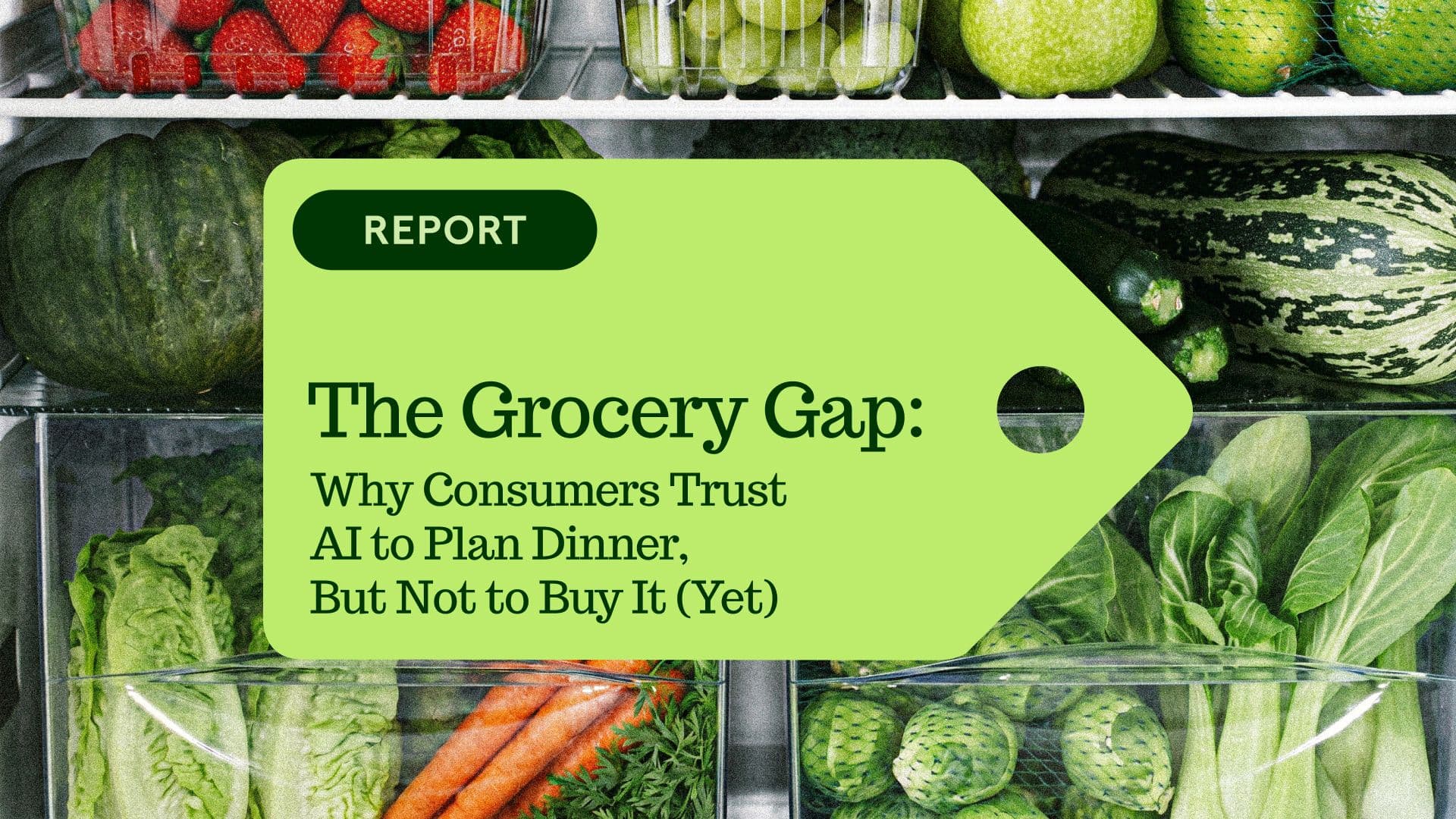
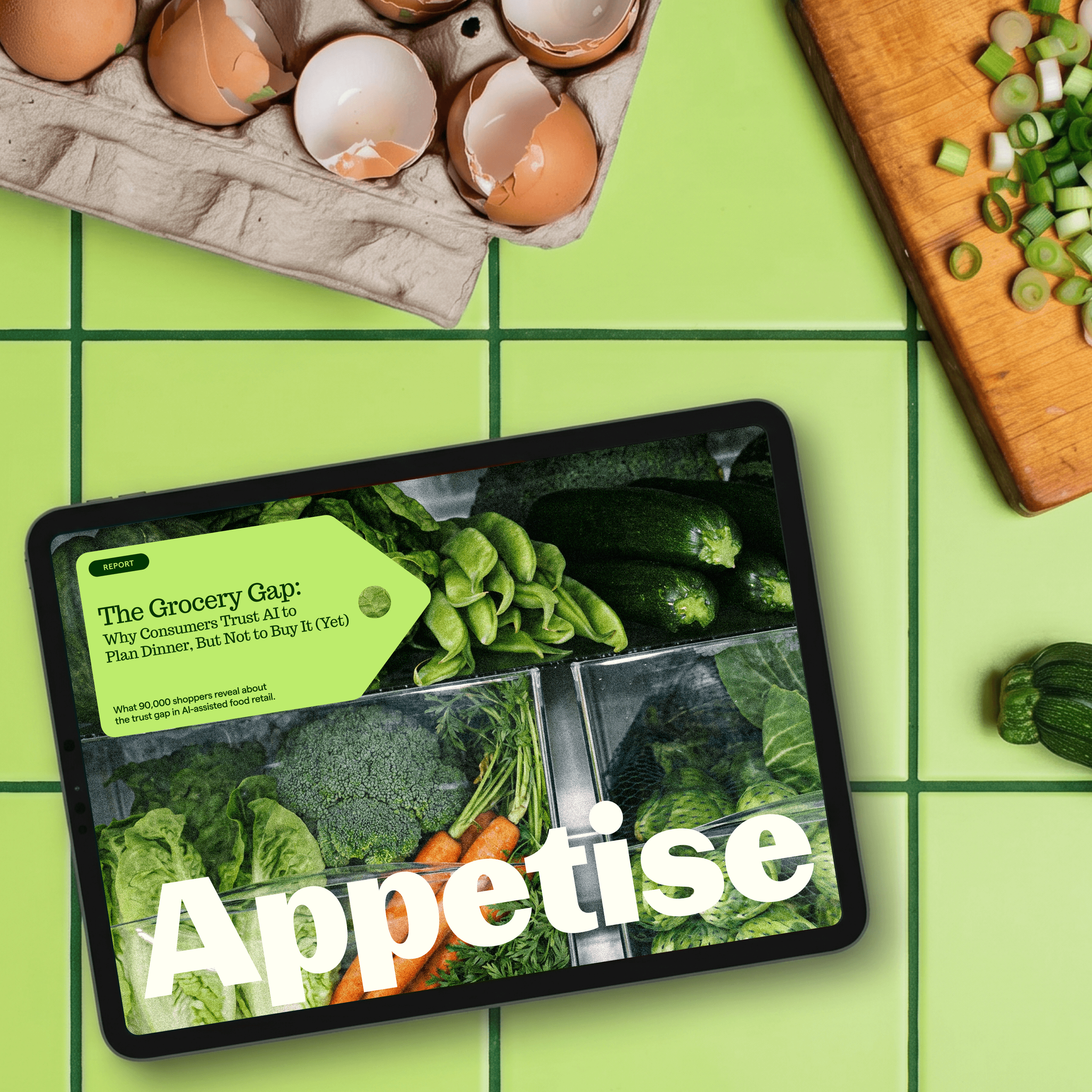
That gap – between consideration and purchase, between ingredient and brand – is what The Grocery Gap report is about. But the more we looked at the data, the more the findings are complicated.
Asking AI what to cook for dinner: most shoppers are on board.
Ask it to pick the brand of pasta to buy: that's where things get interesting.
This isn't a product problem or a technology problem, it's a human adoption one. The permission to hand over that decision simply hasn't been earned yet. But the brands that understand exactly where that boundary sits, and why, will be far better placed when it shifts.
Where do humans most intervene with AI-assisted shopping?
We identified three patterns that account for the majority of overrides of AI-assisted shopping on the Appetise platform.
Price: where brand loyalty, without the physical cues of a shelf environment to reinforce it, is harder to sustain.
Format: where shoppers choose fresh over processed when the suggestion didn't account for what they actually wanted to cook that night.
Fit: where shoppers resize or recut a suggested product to better match their household, in ways that go beyond the product category.
Each one is a data point about where brand presence still matters, and where it currently isn't doing enough work. The brands paying attention to this get a read on their category that supermarket scan data will never surface.
What brand means when an agent is doing the shopping
The traditional levers of food brand marketing (packaging, shelf placement, visual identity, promotional activity) were built to influence someone standing in a supermarket aisle. That moment is increasingly being handled by an agent reading from a different set of signals entirely: price, nutritional data, ingredient lists, review scores, historical purchase behaviour.
None of those signals are inherently bad for food brands. But they're unfamiliar territory, and most brand strategies weren't built with them in mind.
When an AI shopping agent recommends a product, it isn't pulling from a single source. It's assembling a picture from multiple layers of data at once. The brands that show up well across that picture, with accurate product data, structured attributes, credible third-party presence, will have a structural advantage that no amount of promotional spend will easily override.
The food brands that will win with AI shopping agents won't necessarily be the ones with the deepest marketing budgets. They'll be the ones whose product data is accurate, structured, and consistently maintained everywhere it lives.
The grocery gap will close. The question is whether your brand is ready.
Right now, there's a meaningful gap between where shopper trust in AI sits and where it's heading. Comfort levels are still building with consumers. But our data shows once shoppers cross the threshold into fully accepting AI suggestions across their shop, engagement increases by 11 to 25 times across every metric we track.
That builds a different relationship with the shopper entirely.
The brands that understand where the trust gap sits today and start building for the moment it closes will be harder to displace when it does.