Dubai chocolate built a groundswell of social media hype, but for five months the only way to buy the flavour in ANZ supermarkets was an imported Turkish bar. We tracked what happened next, and what the timeline tells FMCG brands about when to move on a flavour.
How we tracked the flavour
We have four years of product data across the five major ANZ supermarket banners, and home cooks on Appetise are already uploading recipes that will shape NPD in 2027. That lets us watch viral flavours arrive, spread through user-uploaded recipes and move into the aisles as new SKUs. Some earn their keep as a staple on shelf, others turn out to be a short-lived trend.
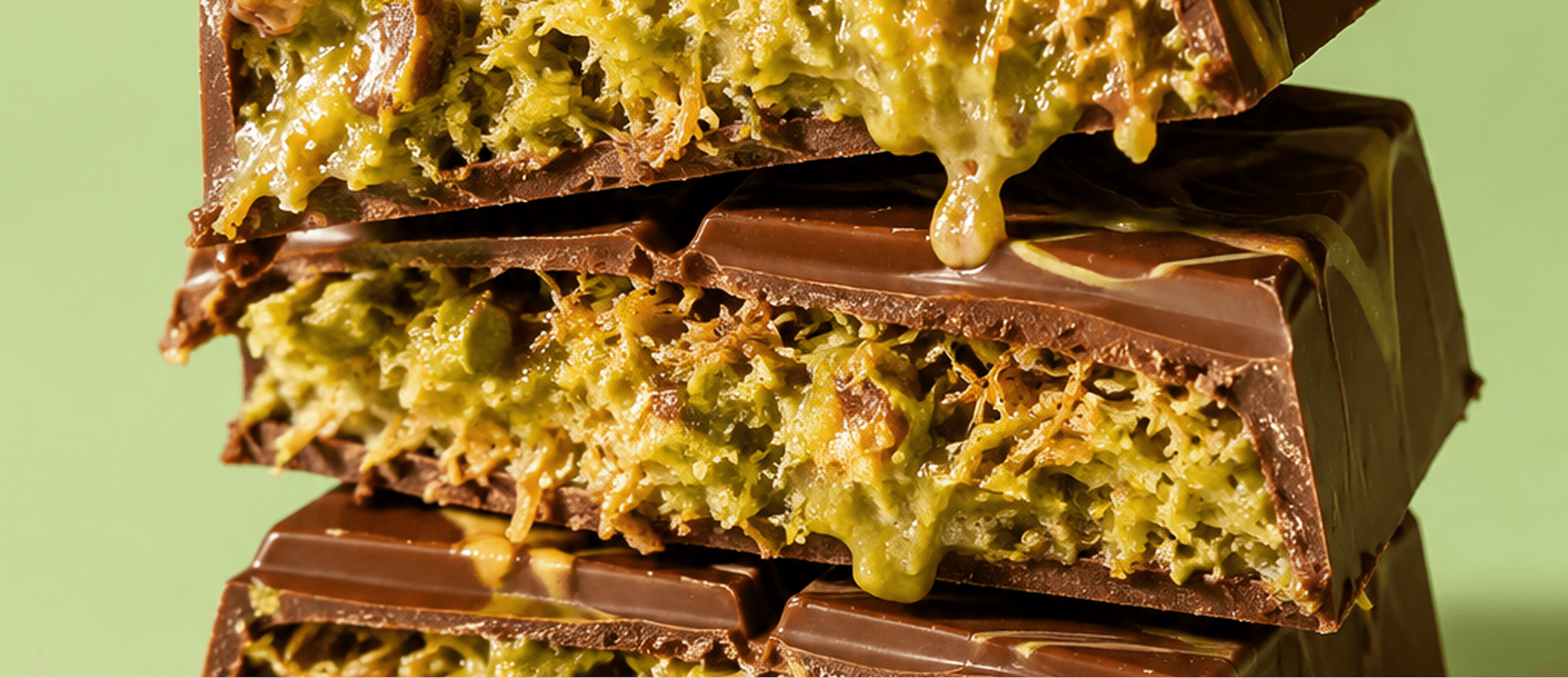
Dubai chocolate was a useful one to follow. It's a multi-sensory sweet experience: a thick, vibrant mixture of Middle Eastern flavours like pistachio cream and tahini, with a crunchy texture from kataifi.
Five months of waiting, then a rush
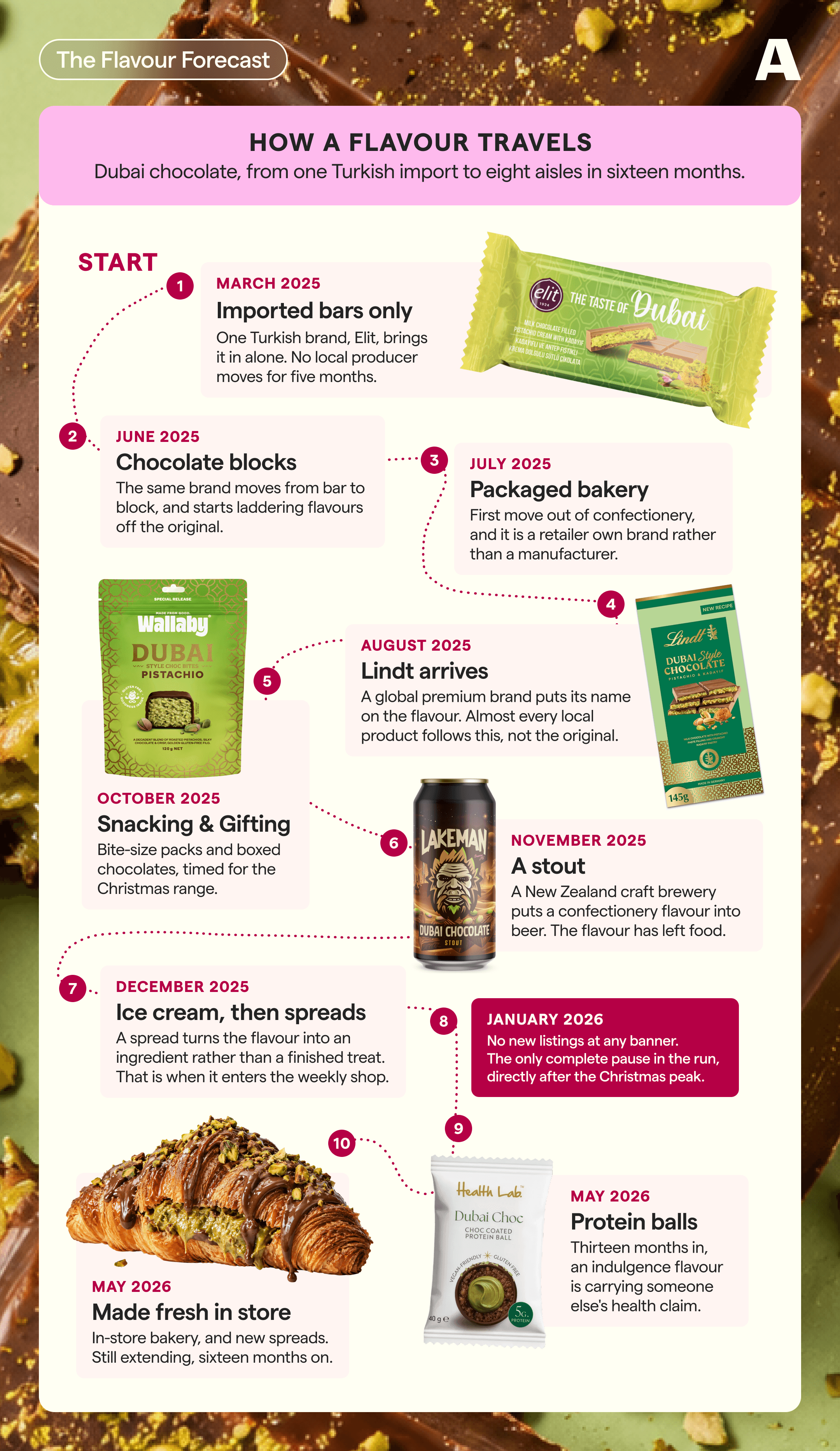
Despite the hype, for five months the only Dubai chocolate on ANZ supermarket shelves was that imported Turkish bar. Local producers were watching and waiting for someone to make the first move, and show the flavour was worth pursuing as a new SKU.
Then global brand Lindt launched its chocolate bar, and local brands moved quickly, including retailer-owned brands. Novelty products followed, such as a stout beer. It took 13 months for a functional product to land: protein balls.
Seen end-to-end, the journey shows a familiar pattern. Plenty of producers spotted the flavour early. Very few wanted to go first, and once someone did, the rest followed fast.
When to move on a flavour

When it comes to NPD, aim for the window just after a credible signal.
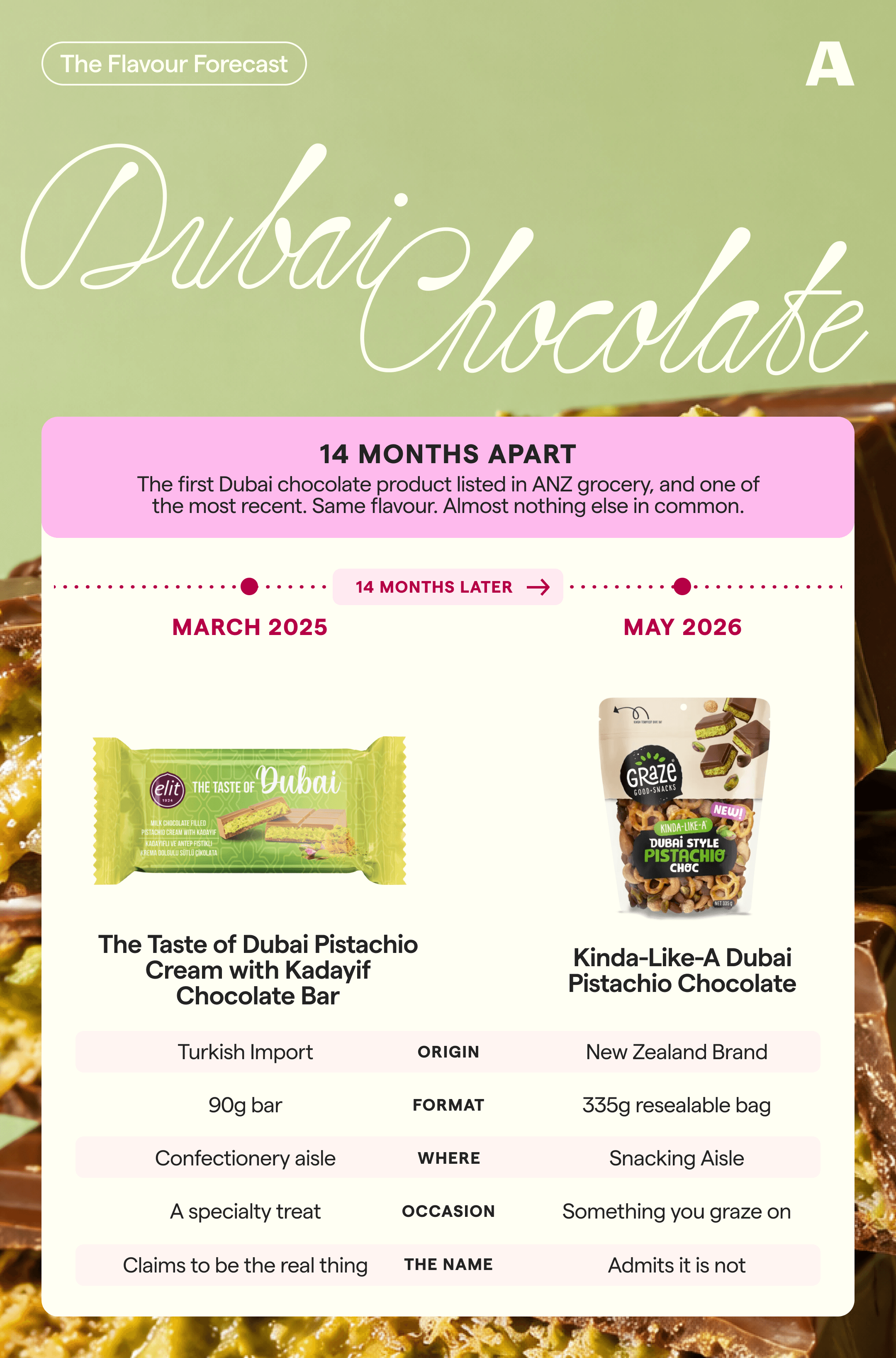
Arriving late to a trend is acceptable if you arrive with an enhanced version, or a new format or category. Arriving late with what everyone else has is a position that fails. And watch the global brands: a global brand jumping on the flavour usually means the easy positions to occupy are gone.
Novelty flavours deserve their own rule. They're a marketing spend, not a ranging strategy. Run them to buy attention, then use that attention to pull people back to your core range. Keeping those two jobs separate makes the range conversation much simpler.
How to find the credible signals
At Appetise, we have a window into the kitchen, and the shop. That means we can tell you whether a flavour is genuinely being cooked with in ANZ, or is only appearing inside finished products.
We also see when a flavour lists for the first time, who listed it, when it crosses into a new category, and when a retailer moves it into permanent range. Put those together and the white space for your category, and the products that actually stay on shelf, start to become clear.
If you'd like to see that view for your own category, talk to us about the white space.
This data is a taster of something bigger. We're preparing a report on the flavours that will reach ANZ shelves in 2027, and Snacks subscribers will hear about it first.
Also on our radar
Mars values the AI-run grocery cart at $788 billion. In a new report, Mars forecasts that consumers' growing willingness to hand routine decisions to AI, like the weekly grocery shop, could drive $788 billion in spending influenced or generated by AI agents.
Does your snack really need another nutrition superpower? Snack brands are going all in on benefit stacking, listing functional benefits like protein, fibre, collagen, probiotics and more. Yet taste is still the real reason anyone becomes a repeat purchaser.
Coles braces for consumers to celebrate Christmas on a budget. Coles has rolled out a Christmas range of more than 200 white label products priced at $10 or less as consumer confidence drops in Australia.
👀 Snacks saw it first. This was first published in our fortnightly newsletter for FMCG brands. Subscribe here.